
Part of the series, "100 Years on Route 66 in 52 Weeks," published by the Missouri Press Association and distributed for reprint by its membership newspapers. Reprinted here with permission by MPA.
By Cheryl Eichar Jett
Although Route 66 was designated almost a century after the Trail of Tears wound its way through Missouri from 1837-1839, their paths wind together from the St. James-Rolla area to Springfield. This was the Northern Route of the Trail of Tears. (There were two other Trail of Tears routes through Missouri – Hildebrand’s and Benge’s.)
Congress established the Trail of Tears National Historic Trail in 1987. The National Park Service (NPS) manages and administrates the trail through its National Historic Trail office and works with the Cherokee Nation, the Eastern Band of Cherokee Indians, the Trail of Tears Association, and federal, state, and local agencies. Various historic sites and trail segments have been certified through research and documentation, and each certified site has an official trail marker. In Missouri, there are four certified Trail of Tears sites roughly along the path of Route 66. Three of them, the Snelson-Brinker Cabin and the Massey Iron Works in Maramec Spring Park (both west of St. James), and Laughlin Park/Roubidoux Spring (at Waynesville), are each within 30 miles of the Trail of Tears Memorial Park at Jerome, which Larry Baggett began building in the 1970s.
Snelson Brinker Cabin
A known camp and burial site, the Snelson-Brinker Cabin was constructed in 1824 as a home for the Snelson family and also served as the Crawford County courthouse before the area was carved out as Phelps County. John B. Brinker purchased the cabin and property in February 1837, less than a year before Trail of Tears detachments came through the area. The cabin is situated just east up the hill from the Meramec River. B.B. Cannon’s detachment of the Cherokees camped here on Dec. 5. Four members of the Richard Taylor detachment died while camped here and were buried in the adjacent family cemetery.
Through the late 1900s and early 2000s, the Pete and Patti Vanetta family volunteered their services as cabin and property keepers. During that time, school students, world travelers, and wedding parties visited. The site was certified in 2006 by the National Park Service, National Historic Trail office, in conjunction with the Missouri Chapter of the Trail of Tears Association. The St. James Historical Preservation Society had operated the property as a historic house museum.
On July 4, 2017, the cabin burned. The fireplace and two walls are left standing, as are a couple of small auxiliary buildings. Visitors can still park in the lane accessible off SR 8 and visit this Cherokee camp site; it's located between St. James and Steeleville. A team of archaeologists and historic preservation specialists have met with local officials and a National Park Service cultural resources specialist to assess how to proceed.
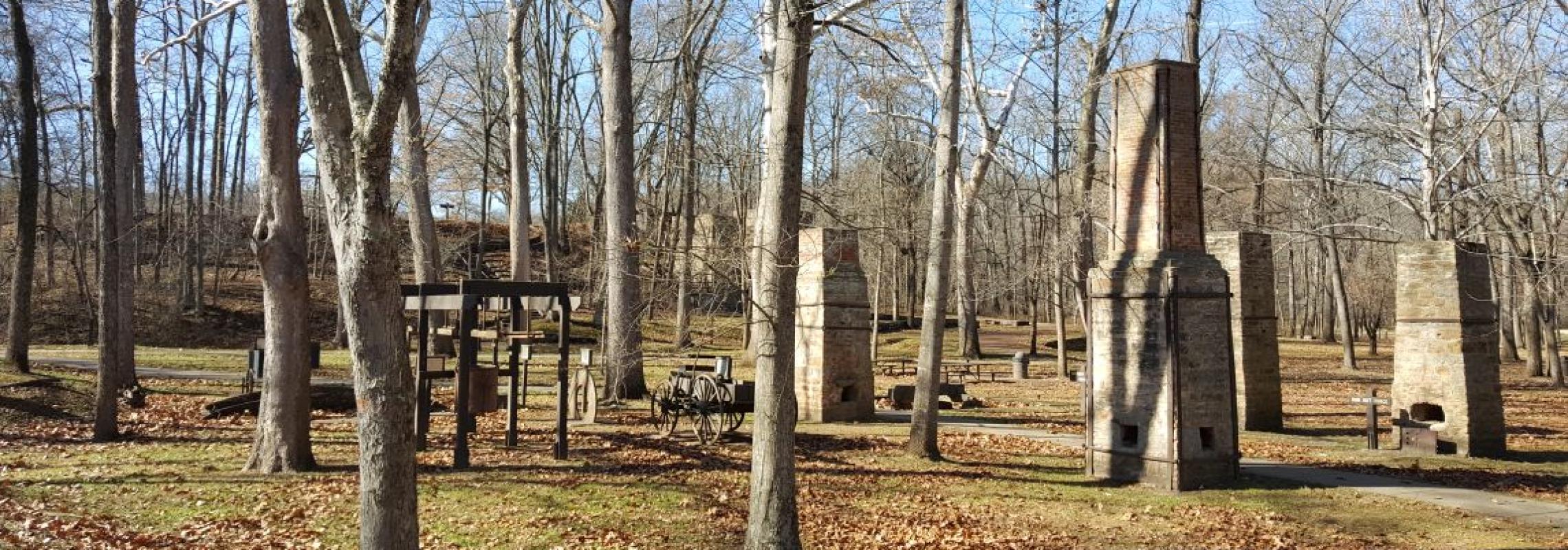
Massey Iron Works at Maramec Spring State Park
The iron works was constructed in 1826 by Samuel Massey, after his business partner, Thomas James, had sent him to inspect the area with its enormous spring. Massey and James were Ohioans, and heard of the beautiful spot from a band of Shawnee Indians traveling east to Washington, D.C. At the iron works site, resources were plentiful but transportation was difficult. The company made kettles, plows, and other items that could be transported in wagons. On Dec. 6, 1837, B.B. Cannon’s Cherokee detachment passed the iron works, as he noted in his journal, before stopping to camp for the night.
The arrival of the railroad in the area and the demand for iron during the Civil War increased production. But by 1876, the iron works was closed and the furnaces went cold. James’s son, William, managed the facility from 1843 until its closure. Following William James’s death in 1912, the property passed to his granddaughter, Lucy Wortham James. Lucy set up a trust and established the James Foundation to control and administrate the park and keep it open for public use and enjoyment.
The park is considered to be one of the most beautiful spots in Missouri. There are trails, a fishery, and other park amenities. Remnants of the iron works remain, with informational signage.
Laughlin Park and Roubidoux Springs at Waynesville
B.B. Cannon’s detachment stopped here to camp on the late afternoon of Dec. 9, 1837. “Encamped and issued corn & fodder, beef & corn meal, weather extremely cold, 12 ½ miles to day,” he recorded in his journal. At the eastern edge of Waynesville, Laughlin Park is accessed from State Highway 17/U.S. Highway 66. It’s a lovely park with Roubidoux Creek running through it. Trail of Tears signage and wayside exhibits were installed and dedicated in 2015. Visitors can walk through the park where the Cherokees camped and forded the creek.
Greene County Trail Segments
The Greene County trail segments are found along the former Missouri Pacific Railroad right-of-way, near the intersection of S. Golden Avenue and W. Republic Road on the south side of Springfield. This is part of the Northern Route that moved from the eastern edge of Springfield southwest to Mr. Dye’s Bell Tavern, which was located near the present-day Wilson’s Creek National Battlefield.
In 2006, Dr. A. Holly Jones of the Center for Archaeological Research, Missouri State University, established a project to begin locating and identifying trail segments through Greene County. The Greene County Commission and Greene County Historic Sites board held a dedication ceremony in 2010 on the trail. Ozark Greenways trail system owns the trail.
Cheryl Eichar Jett is the author of the upcoming book Aprons Away: Women’s Work on Route 66, which will be published this spring. She wrote the Illinois chapter for the recently released Route 66: 100 Years, and also has a monthly column covering “Along Route 66 and Beyond” for Prairie Land Buzz, a regional Illinois publication. She can be contacted at cheryleicharjett@gmail.com.
Photo caption: Chimneys of the Massey Iron Works at Meramec Spring State Park, photo by Cheryl Eichar Jeff.