
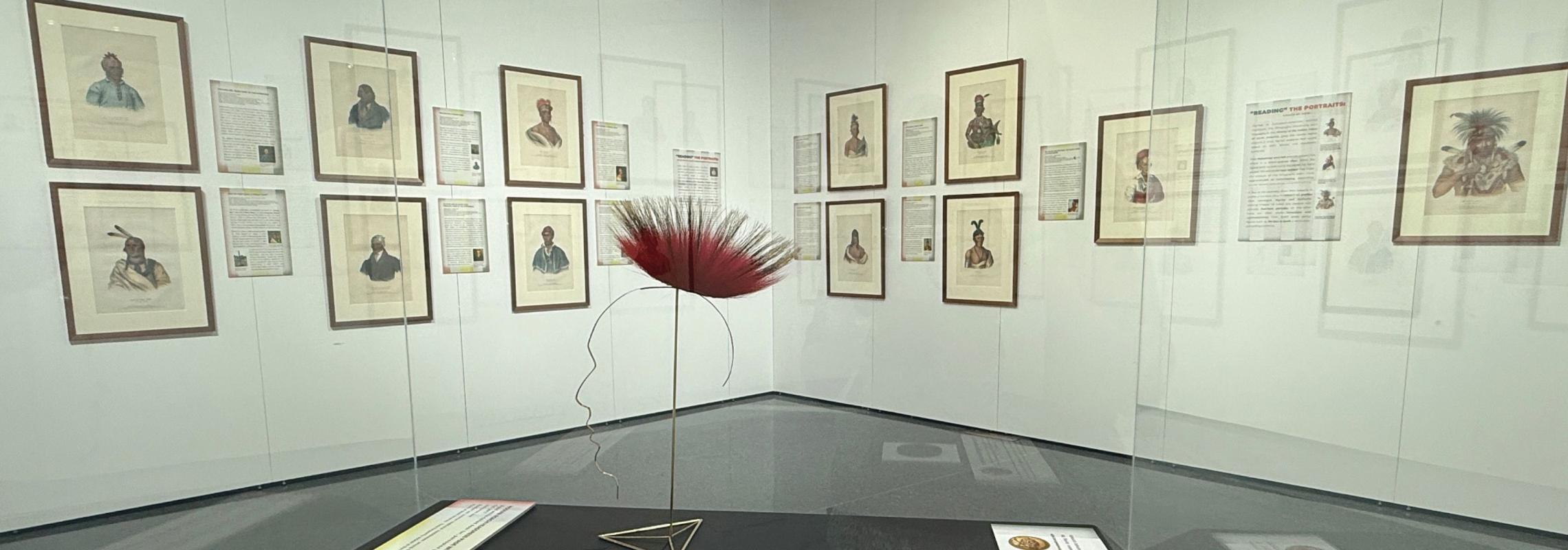
A new exhibition in the William Guitar Little Missouri Gallery of Art welcomes visitors to consider the ways representation, power, and perspective shape our historical understanding of Native American people. Indigenous Identities: From State Sanctioned Portraiture to Native Self Representation is on display through Feb. 20, 2027.
The first section begins with 36 lithographic portraits from McKenney and Hall’s History of the Indian Tribes of North America (1836-1844). Created by Euro-American artists, these images reflect the traditions and biases of Western art, while also documenting encounters in which Native sitters had some control over their self-presentation. In the second section of the exhibit, Indigenous creators, including the early 20th-century Dakota artist Standing Bear offer another vision of identity. Created to illustrate John Neilhardt and Nicholas Black Elk's influential 1930s book Black Elk Speaks.
The exhibition also includes artworks by 21st century artists such as Ioway ceramist Reuben Ironhorse Kent, Osage artist Norman Akers and Oto-Missouria/Cherokee creator Tom Farris. Akers’s layered monoprints draw upon maps, personal experience, Indigenous traditions, and contemporary life, inviting viewers to confront the lasting effects of colonization on Indigenous identity. Likewise, Kent blends ancient pottery traditions and modern techniques, while Farris’s contemporary Indigenous war clubs fuse modernity with ancestral traditions to celebrate Native resilience. These artists present Indigenous history as a living presence rather than a relic of the past.
Together, these works reveal that representation is never neutral. By placing historical portraits alongside Indigenous self-representations, the exhibition encourages viewers to look beyond traditional portraiture and recognize how identity, power, and memory are constructed through art.